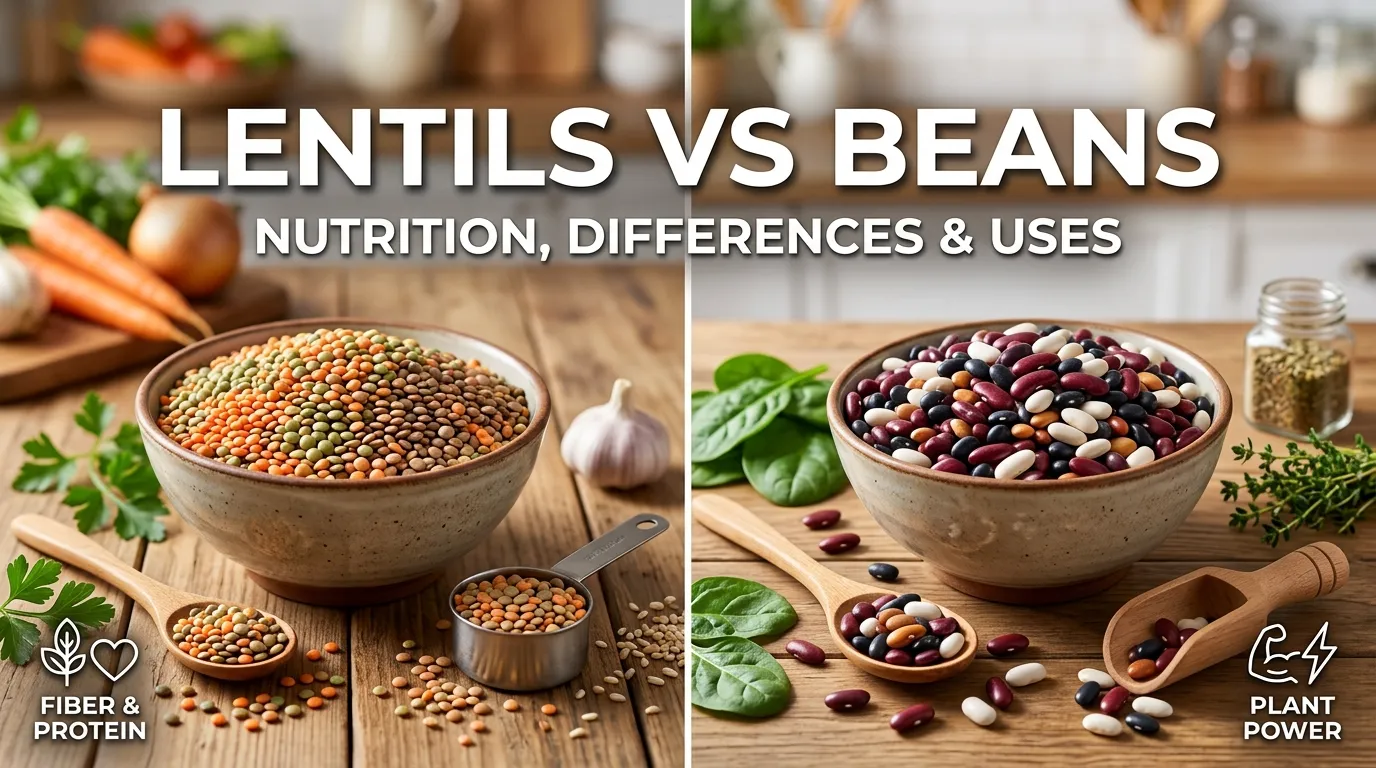
Lentils and beans are both nutrient-rich legumes that provide plant protein, fiber, vitamins, and minerals.
Lentils are usually smaller and faster to cook, while beans come in many varieties with different textures and flavors. Neither is universally better the best choice depends on your nutrition goals, recipe, cooking time, and personal preference.
Key Takeaways
- Lentils and beans are both legumes and excellent sources of plant protein and fiber.
- Lentils generally cook faster and usually do not need soaking.
- Beans offer more variety, including black, kidney, pinto, navy, and chickpeas.
- Both can support a balanced diet and help make meals more filling.
- Your best choice depends on the meal, preparation time, and nutrients you want to emphasize.
Are Lentils and Beans the Same Thing?
If you have ever wondered about lentils vs beans, the first thing to know is that they are closely related but not exactly the same.
Both belong to the legume family. Beans, lentils, and peas are all legumes, and dried beans and lentils are commonly grouped among pulses. They provide plant-based protein, fiber, complex carbohydrates, vitamins, and minerals.
The main difference is the type of seed and the varieties available.
What Are Lentils?
Lentils are small, flat edible seeds that grow inside pods. Common varieties include brown, green, red, yellow, and black lentils.
Their small size makes them especially convenient for quick meals. Red and yellow lentils become soft and creamy when cooked, while green and brown lentils can retain more of their shape.
Lentils are popular in soups, stews, salads, curries, dals, grain bowls, and vegetarian dishes.
What Counts as a Bean?
“Bean” describes a much broader group of foods. Black beans, kidney beans, pinto beans, navy beans, cannellini beans, lima beans, and chickpeas are common examples.
Because beans vary considerably in size and composition, their exact nutrition depends on the variety and serving size.
That is important when comparing lentils vs beans. There is no single nutritional profile that represents every bean.
Lentils vs Beans: Nutrition Comparison
Both foods can be excellent additions to a balanced eating pattern. They are naturally low in fat and provide protein, fiber, iron, folate, potassium, magnesium, and other nutrients.
A typical half-cup serving of cooked lentils provides about 12 grams of protein and 9 grams of fiber, although nutrition varies by preparation. Cooked beans commonly provide around 6–8 grams of fiber per half cup, with protein varying by bean type.
| Nutrient or Feature | Lentils | Beans |
| Plant protein | High | High |
| Fiber | High | High |
| Iron | Good source | Good source |
| Folate | High | High |
| Fat | Generally low | Generally low |
| Variety | Several lentil types | Many bean varieties |
| Cooking time | Usually shorter | Often longer when dried |
| Soaking | Usually unnecessary | Often useful for dried beans |
| Common uses | Soups, dals, salads | Chili, tacos, rice dishes, salads |
The numbers can change depending on the specific variety, cooking method, and serving size. For that reason, it is better to think of lentils and beans as nutrient-rich categories rather than foods with one fixed nutritional value.
Protein and Fiber
Protein and fiber are two major reasons both foods are popular.
Fiber can help you feel full and supports normal digestive function. Protein also contributes to satiety and helps maintain body tissues.
Lentils can have a slight nutritional advantage in some comparisons, while particular beans may provide more of certain types of fiber or other nutrients. The difference is usually less important than simply including a variety of legumes in your diet.
Vitamins and Minerals
Lentils and beans both contribute important micronutrients.
They can provide iron, folate, potassium, magnesium, and B vitamins, although amounts differ among varieties.
For example, lentils are well known for their iron and folate content, while beans can also make significant contributions depending on the type.
If you eat mostly plant-based foods, regularly including different legumes can help increase the variety of nutrients in your meals.
Lentils vs Beans: Cooking and Preparation
One of the biggest practical differences is cooking time.
Cooking Lentils
Lentils are convenient because most varieties do not require soaking before cooking.
After sorting and rinsing them, you can simmer them in water or broth until they reach the texture you want.
Red lentils cook particularly quickly and tend to break down into a creamy texture. Brown and green lentils generally hold their shape better, making them useful for salads, bowls, and side dishes.
This makes lentils a good option when you want a nutritious meal without a long preparation process.
Cooking Dried Beans
Dried beans usually require more preparation.
Depending on the variety, they may benefit from soaking before cooking. They also generally take longer to become tender than lentils.
The extra time is not necessarily a disadvantage. Once cooked, beans can be used in large batches for chili, soups, tacos, burritos, rice dishes, salads, and meal-prep recipes.
If convenience is your priority, canned beans can make the process much faster.
Canned Beans and Convenience
Canned beans are already cooked, so they can be added directly to many recipes after draining.
If you are watching sodium intake, choosing no-salt-added or low-sodium varieties is useful. Draining and rinsing canned beans can also remove some of the added sodium.
This makes canned beans particularly convenient for quick weeknight meals.
Which Is Easier to Digest?
Both lentils and beans contain fermentable carbohydrates and fiber. For some people, eating a large amount of either food can cause gas, bloating, or digestive discomfort.
Lentils are sometimes easier to tolerate because they are smaller and have a thinner seed coat, but individual responses vary.
If legumes cause discomfort, start with smaller portions and increase gradually. Thorough cooking can also help.
For dried beans, soaking and cooking properly can improve texture and may reduce some compounds associated with digestive discomfort.
The key is not to assume that one food will automatically be easier for everyone. Your tolerance, portion size, preparation method, and overall diet all matter.
Lentils vs Beans for Weight Management
Both lentils and beans can fit well into a weight-management eating pattern.
Their combination of protein and fiber can make meals more satisfying. They can also replace some higher-calorie ingredients in dishes without sacrificing texture or substance.
For example, you could use lentils in a vegetable soup or add black beans to a grain bowl.
However, neither food automatically causes weight loss. Overall calorie intake, meal composition, activity, and eating habits matter much more than choosing one legume over the other.
The most useful approach is to choose the one that helps you create nutritious meals you actually enjoy eating.
How Lentils and Beans Taste and Work in Recipes
The difference becomes especially noticeable in the kitchen.
Best Uses for Lentils
Lentils work particularly well in:
- Lentil soup
- Indian dal
- Curries
- Grain bowls
- Lentil salads
- Vegetarian burgers
- Stuffed vegetables
- Stews
- Pasta sauces
Red lentils are ideal when you want a smooth or creamy consistency. Green and brown lentils are better when you want the individual lentils to remain recognizable.
Best Uses for Beans
Beans are extremely versatile because different varieties have different textures.
Black beans work well in tacos, burritos, bowls, and rice dishes.
Kidney beans are popular in chili, salads, and hearty stews.
Pinto beans are commonly used in Mexican-inspired meals and can be mashed or refried.
Chickpeas work well in hummus, salads, curries, and roasted snacks.
Navy and cannellini beans are useful in soups, casseroles, and pasta dishes.
Can You Substitute Lentils for Beans?
Sometimes, yes.
Lentils can replace beans in soups, stews, salads, and some vegetarian fillings. However, the final texture will be different.
For example, replacing black beans with red lentils will produce a softer, creamier dish. Replacing kidney beans with green lentils can create a similar hearty effect but with a different bite.
If a recipe depends heavily on the shape and firmness of beans, the substitution may not work as well.
Which Should You Choose?
There is no universal winner in the lentils vs beans comparison.
Choose lentils when you want:
- Faster cooking
- No soaking for most varieties
- A quick source of plant protein and fiber
- A soft texture for soups and curries
- An ingredient for dals and lentil bowls
Choose beans when you want:
- More variety
- Firm or creamy textures depending on the type
- Ingredients for chili, tacos, burritos, and rice dishes
- Convenient canned options
- A food that can be prepared in large batches
For many people, the best answer is to eat both. Variety allows you to enjoy different flavors, textures, nutrients, and recipes.
Frequently Asked Questions
Are lentils healthier than beans?
Not necessarily. Both are nutritious legumes that provide protein, fiber, vitamins, and minerals. Some comparisons give lentils an edge in particular nutrients, while certain beans provide different types or amounts of fiber and minerals. Instead of looking for one universal winner, include different legumes as part of a varied eating pattern.
Which has more protein, beans or lentils?
Lentils often provide slightly more protein per serving than many common beans, but the exact amount depends on the variety and serving size. Both are useful plant-based protein sources, so the difference is usually less important than the overall quality and variety of your diet.
Which has more fiber, lentils or beans?
Both are high in fiber. Lentils can provide around 9 grams of fiber in a half-cup cooked serving, while many cooked beans provide roughly 6–8 grams. However, bean varieties differ, so a specific bean may contain as much or more fiber than a particular lentil preparation.
Do lentils need to be soaked?
Most lentils do not need soaking. You can generally rinse them and cook them directly. This is one reason lentils are convenient for quick meals. Cooking time varies by variety, with red lentils generally becoming tender faster than many green or brown varieties.
Can you eat lentils and beans every day?
For most people, lentils and beans can be included regularly as part of a balanced diet. They provide protein, fiber, and important micronutrients. If you are not used to eating many legumes, increasing portions gradually may help your digestive system adjust to the additional fiber.
Conclusion:
When comparing lentils vs beans, both deserve a place in a healthy, varied diet.
Lentils are especially convenient because they cook relatively quickly and usually do not require soaking. Beans offer a much wider range of varieties, textures, and culinary uses.
Nutritionally, both provide valuable plant protein, fiber, vitamins, and minerals. Rather than asking which food is universally better, consider what you are cooking, how much time you have, and which texture and flavor you prefer.
For everyday meals, alternating between lentils and different types of beans is a simple way to add variety while enjoying the nutritional benefits of legumes.

I am Nathan Cole, exploring connections on DreamFlirtz.com I am confident, friendly, and always ready for a great chat.
I am someone who enjoys meeting amazing people and sharing good vibes. 🔥