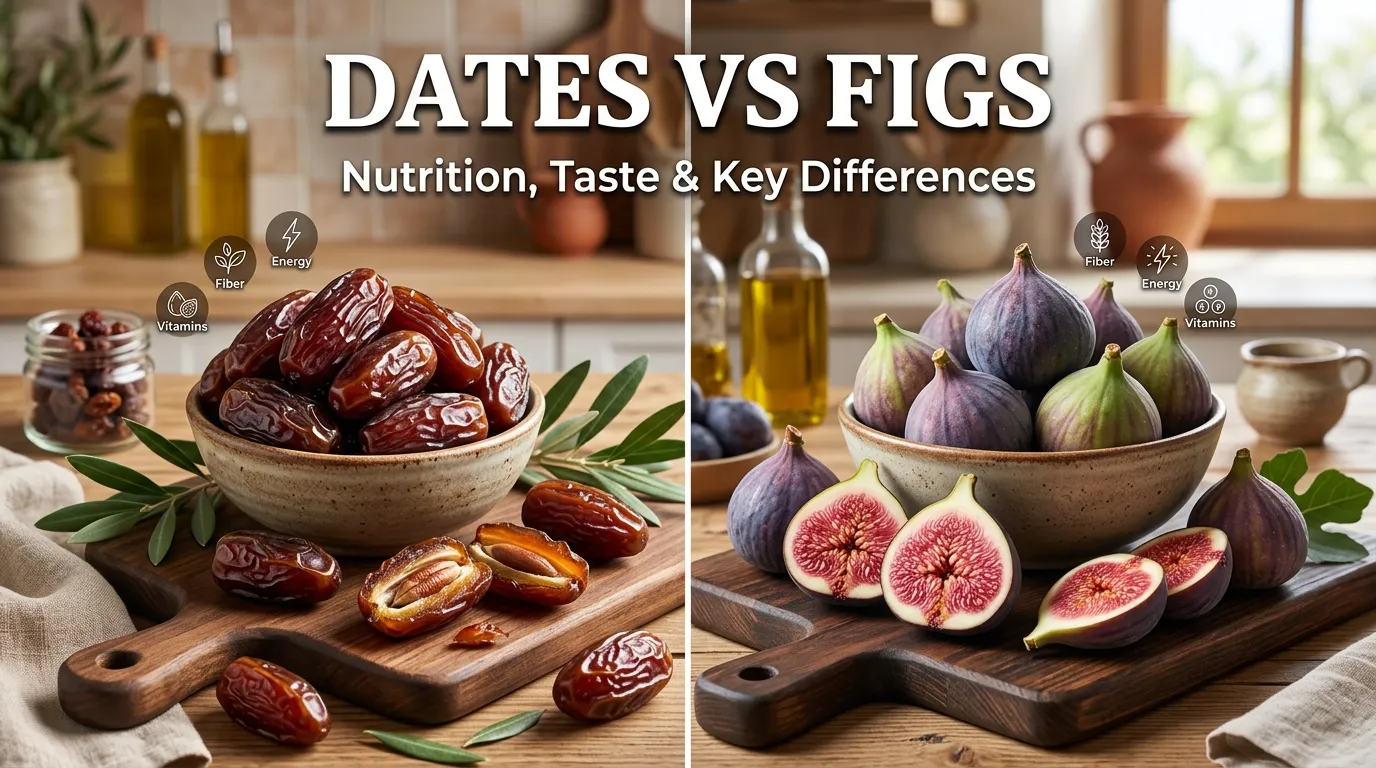
Dates and figs are both naturally sweet fruits, but they differ in texture, flavor, and nutritional profile.
Dates are generally denser, sweeter, and higher in carbohydrates per serving, while figs provide notable fiber and minerals. The better choice depends on whether you prioritize sweetness, fiber, calories, or a particular culinary use.
Key Takeaways
- Dates are typically softer, chewier, and sweeter than figs.
- Figs have a distinctive seed-filled texture and can be eaten fresh or dried.
- Both fruits provide fiber, carbohydrates, minerals, and naturally occurring sugars.
- Dried fruit is more concentrated than fresh fruit because much of its water has been removed.
- Neither fruit is automatically better; your best choice depends on your nutritional and dietary goals.
Dates vs Figs: What Is the Difference?
Dates and figs are both fruits commonly enjoyed fresh or dried, but they come from different plants and have noticeably different characteristics.
Dates grow on date palm trees and are especially known for their rich sweetness and chewy texture. Medjool dates are one familiar variety in the United States. Figs grow on fig trees and contain many tiny edible seeds that create their characteristic texture.
The biggest practical difference is sweetness and texture. Dates tend to be sticky, caramel-like, and very sweet. Figs are usually softer and more subtly sweet, with a slightly earthy or jammy flavor.
Nutrition also varies considerably depending on whether you compare fresh fruit, dried fruit, or equal-weight servings.
What Are Dates?
Dates are the fruits of the date palm. They are commonly sold dried or partially dried and can range from small, firm varieties to large, soft Medjool dates.
Because dates contain relatively little water when dried, their carbohydrates and calories are concentrated. They are popular as snacks and are also used in energy balls, desserts, smoothies, sauces, and baked goods.
What Are Figs?
Figs are fruits from the Ficus genus. They can be eaten fresh or dried and come in several varieties.
Fresh figs contain considerably more water than dried figs. Dried figs are smaller, sweeter, and more concentrated, making them convenient for snacking but also easier to overeat compared with the same volume of fresh fruit.
Dates vs Figs Nutrition Comparison
The nutritional difference becomes clearer when you consider serving size and preparation.
| Nutrient or Feature | Dates | Figs |
| Typical form | Often dried | Fresh or dried |
| Flavor | Very sweet, caramel-like | Sweet, fruity, slightly earthy |
| Texture | Chewy and soft | Soft, seedy, sometimes jammy |
| Natural carbohydrates | High, especially when dried | Moderate to high when dried |
| Dietary fiber | Good source | Good source |
| Potassium | Notable source | Provides potassium |
| Calcium | Some | Especially notable in dried figs |
| Water content | Lower when dried | Much higher when fresh |
| Common uses | Snacks, desserts, energy bites | Snacks, salads, baking, cheese boards |
These general characteristics are more useful than declaring one fruit universally superior because nutritional values change with variety and serving size.
Which Has More Sugar: Dates or Figs?
Dates generally taste sweeter and contain a concentrated amount of naturally occurring sugar, particularly when eaten dried.
Figs also contain natural sugar, but fresh figs have a much higher water content, which makes them less concentrated than dried fruit.
This distinction matters. Comparing one fresh fig with one dried date is not an equal nutritional comparison because the fruits differ greatly in size and water content.
If you’re watching your intake of concentrated carbohydrates or sugars, portion size matters more than simply choosing one fruit over the other.
Which Has More Fiber?
Both dates and figs provide dietary fiber.
Dried figs are particularly useful when you’re looking for a concentrated source of fiber, while dates also contribute fiber as part of a balanced diet.
Fiber supports normal digestive function and can help foods feel more filling. However, eating large portions of dried fruit can also add substantial calories and carbohydrates.
If fiber is your main reason for choosing between the two, compare the nutrition label for the actual serving you plan to eat rather than relying on the fruit’s reputation alone.
Dates vs Figs: Calories and Carbohydrates
Dried dates and dried figs are both energy-dense compared with their fresh counterparts because drying removes water.
Dates are especially concentrated and are often used as a quick source of carbohydrates. That’s one reason they appear frequently in homemade energy snacks and pre- or post-exercise foods.
Figs also provide carbohydrates and calories, particularly when dried. Fresh figs, however, contain much more water and therefore have fewer calories per gram than dried figs.
For weight management, the important factor is not whether the fruit is labeled “healthy.” It’s the portion, total calorie intake, and overall eating pattern.
Health Benefits of Dates
Dates provide several nutrients that can contribute to a balanced diet.
Their dietary fiber supports digestive health, while minerals such as potassium and magnesium contribute to normal body functions. Dates also contain plant compounds with antioxidant activity.
Their biggest practical advantage is their concentrated sweetness. A small amount can add sweetness to oatmeal, yogurt, smoothies, baked goods, or homemade snack bars without relying entirely on refined sugar.
Still, dates are not a free food simply because their sugar occurs naturally. Dried dates are calorie-dense, so reasonable portions are useful.
Health Benefits of Figs
Figs provide dietary fiber and minerals, including potassium, calcium, and magnesium. They also contain naturally occurring plant compounds.
Fresh figs offer the additional benefit of high water content, making them quite different from dried figs in terms of concentration.
Dried figs can be a convenient way to add fruit and fiber to the diet. They work well with nuts, yogurt, oatmeal, salads, and cheese.
As with dates, dried figs should be viewed as a concentrated food rather than nutritionally equivalent to the same amount of fresh fruit.
Taste and Texture Differences
If you’re choosing based on flavor, the two fruits are easy to distinguish.
Dates:
- Very sweet
- Chewy
- Sticky or soft
- Caramel-like flavor
- Often used as a natural sweetener
Figs:
- Sweet but generally less intensely sweet
- Soft and tender
- Tiny edible seeds
- Fruity and slightly earthy
- Excellent fresh, dried, or incorporated into savory dishes
Dates work particularly well when you want sweetness. Figs can offer more textural contrast, especially when paired with nuts, cheese, or leafy greens.
Fresh Figs vs Dried Figs
This is one of the most important distinctions in a dates-versus-figs comparison.
Fresh figs contain a lot of water. They are delicate, soft, and perishable. Dried figs have had much of that water removed, concentrating their calories, carbohydrates, and naturally occurring sugars.
Dates are also frequently sold dried or semi-dried, so comparing dried dates with fresh figs can create a misleading impression.
For a meaningful comparison, use similar serving sizes and similar forms—such as dried dates versus dried figs or fresh figs versus fresh dates when available.
Which Is Better for Your Diet?
There isn’t one universal winner.
For Fiber
Both can contribute useful dietary fiber. Dried figs can be an especially convenient option when you want concentrated fruit and fiber.
For a Naturally Sweet Snack
Dates are particularly useful when you want an intensely sweet, chewy snack or ingredient.
For Minerals
Both fruits provide minerals, but their exact amounts depend on variety, preparation, and serving size. Figs are commonly valued for their calcium content, while dates are notable for minerals such as potassium.
For Cooking and Baking
Dates are excellent for blending into energy bites, sauces, smoothies, and naturally sweet baked recipes.
Figs are versatile in salads, oatmeal, baked goods, appetizers, and dishes that combine sweet and savory flavors.
Can You Eat Dates and Figs Together?
Yes. Dates and figs can easily be eaten together as part of a varied diet.
Try chopped dates and dried figs with nuts, add both to oatmeal, or combine them with plain yogurt. Because both dried fruits are naturally sweet and relatively concentrated, a modest portion is usually enough.
Pairing dried fruit with foods containing protein or healthy fats—such as nuts or yogurt—can also make a snack more balanced and satisfying.
FAQs:
Are dates healthier than figs?
Neither fruit is universally healthier. Both provide fiber, carbohydrates, minerals, and naturally occurring plant compounds. Dates are particularly sweet and concentrated, while figs offer their own nutritional benefits and can be eaten fresh or dried. The better choice depends on your portion size, dietary needs, and whether you prefer fresh or dried fruit.
Which has more sugar, dates or figs?
Dates generally have a sweeter taste and are highly concentrated in natural sugars when dried. Dried figs also contain considerable natural sugar. The actual amount depends on the variety, preparation, and serving size, so nutrition labels provide the most useful comparison for packaged products.
Are figs or dates better for digestion?
Both can contribute dietary fiber, which supports normal digestive function. Dried figs are often chosen specifically for their fiber content, while dates also provide fiber. Drinking enough fluid and eating a varied diet are important parts of supporting healthy digestion.
Are dates and figs good for weight management?
Both can fit into a balanced diet, but dried dates and figs are calorie-dense because they contain less water than fresh fruit. Portion size is therefore important. Fresh figs can provide more volume for fewer calories than dried figs, while dates can be useful in small portions when you want concentrated sweetness.
Can you eat dates and figs every day?
For most people, both can be included as part of a varied eating pattern. Because dried fruit is concentrated, portions matter. Pairing dates or figs with other nutritious foods and varying your fruit choices can help keep your overall diet balanced.
Conclusion:
Dates vs figs is not really a question of one fruit being universally better. Dates stand out for their intense sweetness, chewy texture, and concentrated carbohydrates, while figs offer a distinctive seeded texture and useful nutrients in both fresh and dried forms.
The most important comparison is fresh versus dried, serving size, and your personal dietary goal. If you want a naturally sweet ingredient, dates are an excellent option. If you want fresh fruit or enjoy the unique texture of figs, figs can be a great choice. Both can have a place in a balanced diet.

I am Jason Bennett, a confident guy who enjoys good vibes, fun conversations, and meeting interesting people.
I am here on DreamFlirtz.com to make exciting connections and turn simple chats into memorable moments.