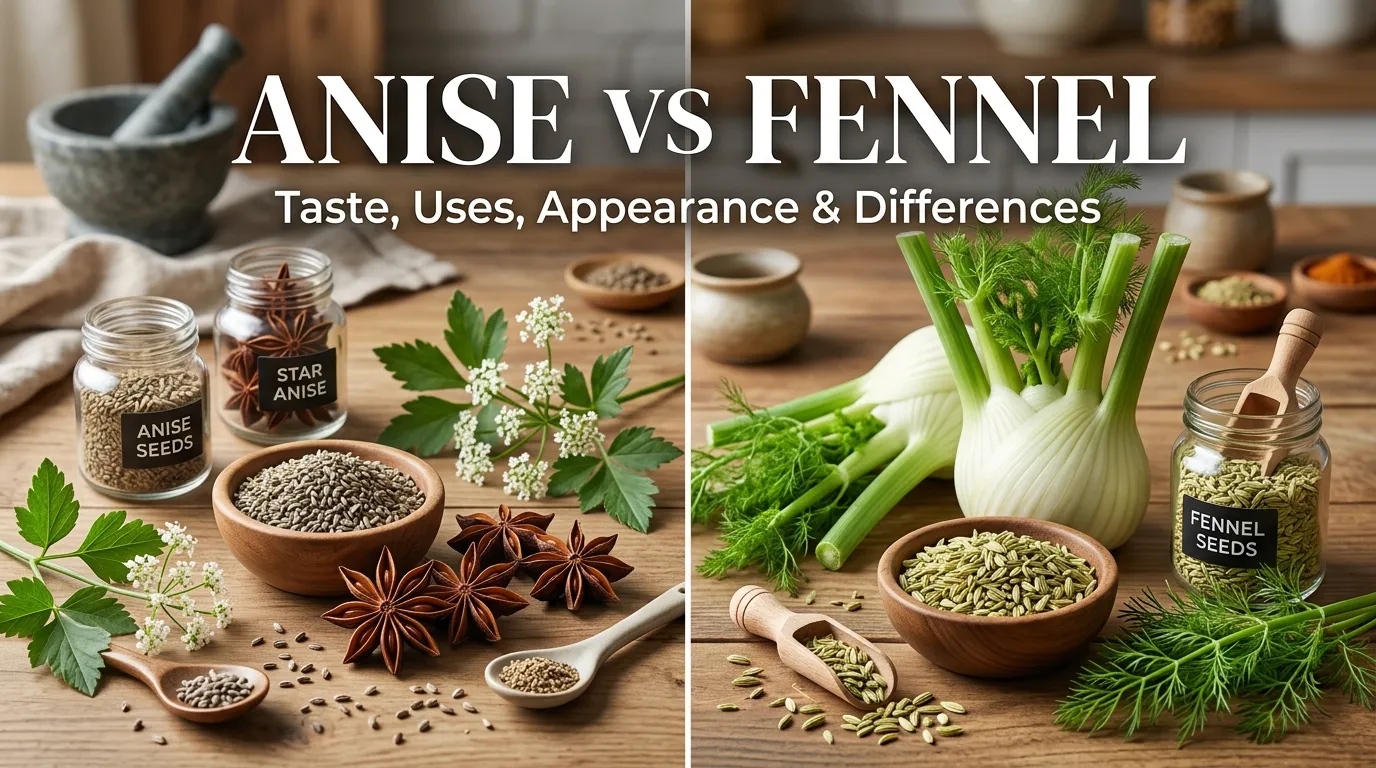
Anise and fennel are different plants, although they belong to the same parsley family, Apiaceae, and share a similar licorice-like flavor.
Anise comes from Pimpinella anisum, while fennel comes from Foeniculum vulgare.
Anise is generally smaller and more intensely sweet, while fennel has a milder, more herbal flavor and can be used as a seed, leafy herb, or bulb.
Key Takeaways
- Anise and fennel are not the same plant.
- Both have a characteristic licorice-like taste partly associated with the compound anethole.
- Anise seeds are generally smaller and have a stronger, sweeter anise flavor.
- Fennel seeds are larger and usually have a milder, more herbal character.
- You can substitute one for the other in some recipes, but the final flavor will not be exactly the same.
- Star anise is different from both and comes from an unrelated tree.
Are Anise and Fennel the Same?
No. Anise and fennel are related but different plants.
Anise is Pimpinella anisum, an annual herb grown primarily for its dried fruits, commonly called anise seeds or aniseed. The FDA identifies anise as the dried ripe fruit of Pimpinella anisum and describes its strong licorice-like aroma.
Fennel is Foeniculum vulgare. It is a different plant whose seeds are widely used as a spice, while other parts—including the bulb and leafy fronds of culinary fennel—can also be eaten.
The confusion is understandable because both plants belong to the Apiaceae family, which also includes familiar plants such as carrots, parsley, and celery. More importantly for cooks, both contain aromatic compounds that produce a recognizable anise or licorice-like flavor.
So, if a recipe calls for anise, don’t automatically assume that fennel is the same ingredient.
Anise vs Fennel: Key Differences
| Feature | Anise | Fennel |
| Botanical name | Pimpinella anisum | Foeniculum vulgare |
| Plant family | Apiaceae | Apiaceae |
| Common culinary part | Dried fruit, commonly called seed | Seeds, bulb, fronds, stalks |
| Seed appearance | Smaller, ridged, greenish-gray | Larger, elongated, green to yellowish-tan |
| Main flavor | Sweet, strong licorice/anise | Sweet, anise-like, herbal |
| Typical role | Baking, sweets, beverages | Savory dishes, sausages, vegetables, teas |
| Flavor intensity | Usually more concentrated | Usually milder and more herbal |
The FDA’s spice definitions describe anise as greenish-gray and crescent-shaped with a strong licorice-like odor, while fennel seed is described as green or yellowish-tan with a sweet anise-like taste.
Anise
Anise is best known for its small aromatic seeds. Its flavor is immediately recognizable as sweet and licorice-like, which is why it appears in many baked goods, candies, teas, and flavored alcoholic drinks.
Its concentrated flavor means you often don’t need a large quantity to make an impression.
Fennel
Fennel is more versatile as a plant. Depending on the variety and preparation, cooks can use its bulb as a vegetable, its fronds as an herb, and its seeds as a spice.
Fennel seeds provide a similar sweet anise character but usually bring a more herbal quality. They are common in savory cooking, including Italian-style sauces and sausages, as well as many South Asian dishes.
Anise vs Fennel: Flavor and Appearance
The biggest practical difference for most home cooks is flavor intensity.
What Does Anise Taste Like?
Anise has a distinctly sweet, aromatic flavor that many people compare with black licorice. Its anise character can be quite direct and noticeable.
It works particularly well when you want the anise flavor to be one of the main aromatic notes rather than simply a background seasoning.
Anise is therefore common in cookies, cakes, breads, candies, and certain traditional drinks.
What Does Fennel Taste Like?
Fennel also has a sweet, licorice-like taste, but its flavor is generally less concentrated and more herbal.
That makes fennel particularly useful in savory dishes where you want a subtle aromatic sweetness without turning the entire dish into a strongly anise-flavored recipe.
Fennel seeds can work well with meat, vegetables, tomato-based sauces, breads, and spice blends.
Anise Seeds vs Fennel Seeds
If you have two jars sitting next to each other, identifying them can be difficult at first.
Anise seeds are generally smaller, while fennel seeds tend to be larger and more elongated. Fennel seeds can also have a greener appearance, although color varies depending on age, processing, and storage.
The taste provides another clue. Anise usually gives you a stronger and more direct licorice note. Fennel has the familiar anise flavor but often adds a softer, greener or more herbal impression.
This similarity is not accidental. Both plants contain anethole, an aromatic compound strongly associated with the sweet anise-like character. Their different combinations of other aromatic compounds help explain why the overall flavor is not identical.
How Are Anise and Fennel Used in Cooking?
Best Uses for Anise
Anise is especially useful in recipes where a sweet, aromatic spice is welcome.
Common applications include:
- Cookies and biscuits
- Cakes and sweet breads
- Candies
- Desserts
- Herbal teas
- Certain liqueurs
- Mediterranean and European baked goods
If a traditional recipe specifically calls for anise, using actual anise seed is usually the safest way to preserve its intended flavor.
Best Uses for Fennel
Fennel has a wider range of culinary applications because more parts of the plant can be used.
Fennel seeds are commonly used in:
- Sausage seasoning
- Tomato sauces
- Pasta dishes
- Roasted vegetables
- Bread
- Curries and spice blends
- Fish and meat dishes
- Herbal teas
Fresh fennel bulb is a completely different cooking experience from either dried seed. It has a mild, aromatic vegetable flavor and can be roasted, grilled, braised, or eaten raw.
Can You Substitute Fennel for Anise?
Yes, in many recipes—but expect a flavor difference.
Because the two spices have a similar anise-like profile, fennel can sometimes replace anise when you don’t have anise seed. Likewise, anise can sometimes replace fennel seed.
However, substitution works best when the exact flavor isn’t critical.
For example, if a savory sauce calls for fennel seed, anise may provide the desired aromatic quality but can taste sweeter and more strongly like licorice. Conversely, replacing anise in a delicate cookie with fennel can make the flavor somewhat more herbal.
A practical approach is to use a smaller amount of the stronger-tasting spice, taste the mixture when appropriate, and adjust gradually.
The two spices are considered reasonably interchangeable in many culinary situations, but food-focused sources still note meaningful differences in sweetness, intensity, and herbal character.
Anise vs Fennel vs Star Anise
One of the most common sources of confusion is star anise.
Despite the name, star anise is not simply another form of anise seed. It comes from Illicium verum, a completely different plant.
Here is the simplest way to remember them:
- Anise: Pimpinella anisum; small aromatic fruits used as a spice.
- Fennel: Foeniculum vulgare; seeds, bulb, fronds, and other parts are used in cooking.
- Star anise: Illicium verum; a star-shaped dried fruit from a tree.
Star anise is particularly associated with Asian cuisines and has a strong anise-like flavor, but it should not automatically be substituted for anise or fennel in equal amounts.
FAQs:
Is fennel seed the same as anise seed?
No. Fennel seed and anise seed come from different plants. Anise comes from Pimpinella anisum, while fennel comes from Foeniculum vulgare. They taste similar because both contain aromatic compounds associated with anise flavor, but fennel tends to be more herbal while anise is generally sweeter and more concentrated.
Can I use fennel instead of anise?
Usually, yes, especially in recipes where anise is not the dominant flavor. Fennel can provide a similar licorice-like note, although the finished dish may taste less sweet and more herbal. In delicate desserts or traditional recipes where anise is central to the flavor, the substitution will be more noticeable.
Which tastes sweeter, anise or fennel?
Anise is generally perceived as the more concentrated and distinctly sweet licorice-like spice. Fennel also has sweetness and anise character, but its flavor is often described as milder and more herbal. The exact intensity depends on the variety, freshness, preparation, and amount used.
Why do anise and fennel taste similar?
Both belong to the Apiaceae family and contain anethole, an aromatic compound strongly associated with the characteristic sweet, licorice-like flavor. Their other aromatic compounds differ, however, which is why anise and fennel don’t taste exactly alike.
Is fennel ever called anise?
Yes, this is one reason the ingredients can be confusing. Some markets and older culinary references have used “anise” for bulb fennel, even though they are botanically different plants. Culinary references specifically warn that fresh bulb fennel can sometimes be mislabeled as anise.
Conclusion:
The easiest way to remember anise vs fennel is this: they are relatives, not the same ingredient.
Anise is a small spice with a strong, sweet licorice-like flavor, making it especially useful in baking, sweets, and beverages. Fennel is a more versatile plant, and its seeds offer a similar but generally milder, more herbal flavor.
Its bulb and fronds also have important culinary uses.
Because their flavors overlap, you can substitute one for the other in many recipes. But if a dish depends heavily on a specific anise or fennel flavor, using the ingredient named in the recipe will give you the most predictable result.
And remember: star anise is a third, completely different plant. That distinction alone can prevent a surprising number of kitchen mistakes.