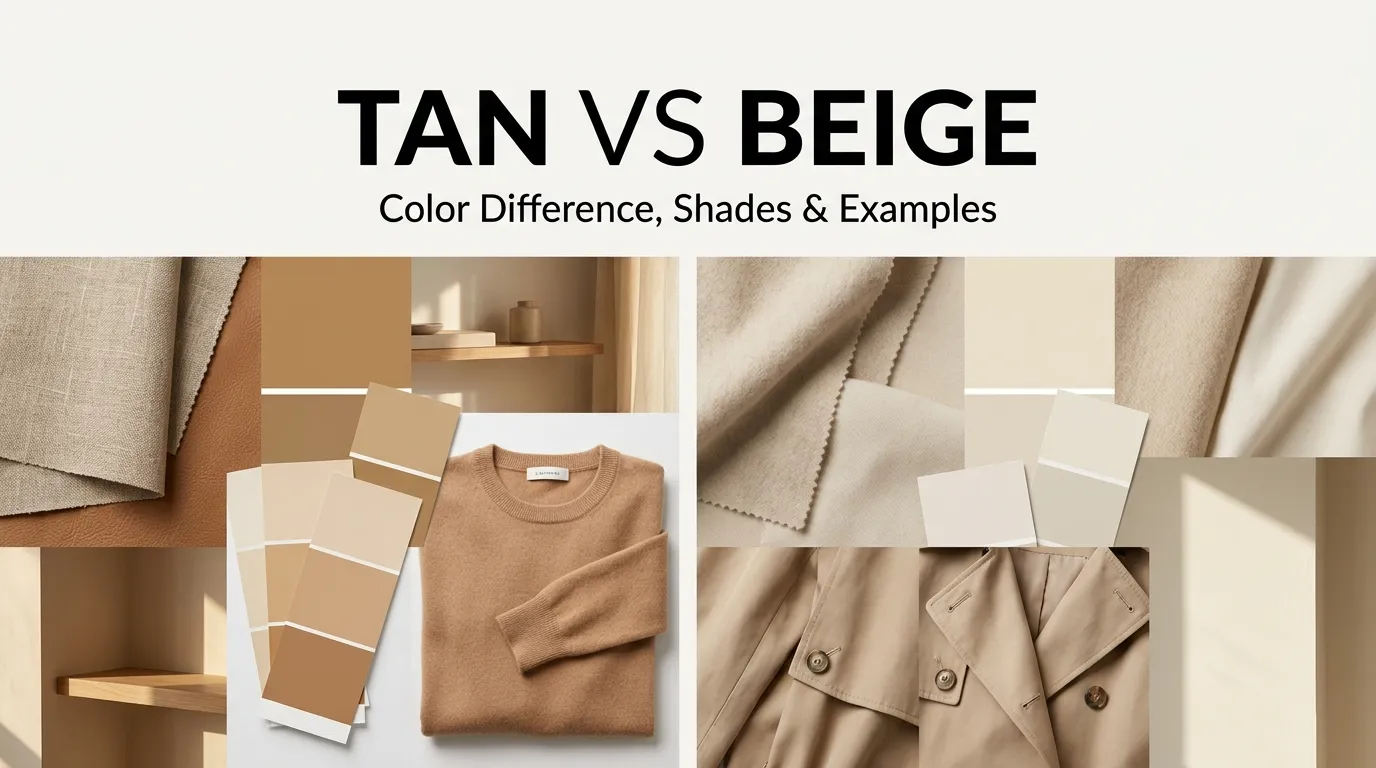
Tan vs beige: Tan is generally a deeper, warmer light-brown neutral, while beige is usually lighter, softer, and more muted.
Tan commonly has yellow, golden, or brown warmth, whereas beige can have cream, yellow, pink, or gray undertones.
However, the exact appearance varies because “tan” and “beige” describe broad color families rather than one universal shade.
Key Takeaways
- Tan is usually darker and warmer than beige.
- Beige is generally lighter and more muted, often appearing close to cream or off-white.
- Tan commonly has golden, yellow, or brown undertones.
- Beige can have warm or cool-leaning undertones, especially when gray is present.
- Tan works well for earthy, casual, and leather-inspired looks, while beige is often used for soft backgrounds, interiors, and understated outfits.
- The two colors can work beautifully together when their undertones are compatible.
What Is the Difference Between Tan and Beige?
Tan and beige are both popular neutral colors, which is why they are often confused. They can overlap visually, especially in clothing, furniture, paint, and accessories.
The easiest distinction is depth and warmth. Tan generally looks more like a light or medium brown with noticeable warmth. Beige usually looks lighter and more subdued, sometimes approaching cream or off-white.
Current color guides commonly describe tan as warmer and more brown or golden, while beige tends to be paler and more muted.
There is an important caveat: neither word describes one exact color in everyday design. A clothing brand may call one shade “beige,” while another brand may call a very similar shade “tan.” Paint manufacturers also create many variations within each color family.
What Is Tan?
Tan is a warm neutral that generally falls between pale brown and deeper beige. It is commonly associated with sand, leather, suede, natural wood, and sun-warmed materials.
Tan tends to have yellow, golden, orange, or brown qualities. Because of this warmth, it usually looks more noticeable than a very pale beige.
In everyday language, “tan” can also describe skin that has become darker after sun exposure. That meaning is separate from the color comparison, but it helps explain why the word often carries a warm, sun-related association.
What Is Beige?
Beige is a light neutral that sits close to cream, pale brown, or off-white. It is often used when someone wants a color that feels softer than white without becoming strongly colorful.
Beige can have different undertones. Some versions lean yellow or creamy, while others contain gray or pink influences. This is why two colors both labeled “beige” can look surprisingly different beside the same white wall or piece of furniture.
Tan vs Beige: Side-by-Side Comparison
| Feature | Tan | Beige |
| General appearance | Light to medium brown | Pale brown or creamy neutral |
| Depth | Usually deeper | Usually lighter |
| Warmth | Usually warm | Neutral to warm, depending on undertone |
| Common undertones | Yellow, gold, brown, orange | Cream, yellow, gray, pink |
| Visual impact | More noticeable | Softer and quieter |
| Common associations | Leather, sand, earth, suede | Linen, cream, walls, minimalist spaces |
| Fashion use | Shoes, jackets, bags, pants | Sweaters, dresses, coats, basics |
| Interior use | Furniture, accents, walls | Walls, upholstery, large backgrounds |
This comparison describes common usage rather than a strict scientific boundary. Color naming varies between manufacturers, designers, retailers, and industries.
Is Tan Darker Than Beige?
Usually, yes. In everyday color descriptions, tan is generally deeper than beige.
Imagine a simple neutral scale:
Cream → Beige → Tan → Light Brown → Brown
This is only a rough visual guide, not a universal color standard. Some beige shades can be darker than some tan shades.
The key is that color depth alone does not determine the name. Undertone matters too. A grayish medium shade may be described as beige, while a warmer golden shade of similar depth may be called tan.
For example, if you are shopping for pants, one brand’s “dark beige” may look nearly identical to another brand’s “light tan.” Checking the actual product photos or physical swatches is more reliable than relying on the name alone.
Tan vs Beige Undertones
Undertones are one of the most useful ways to understand the difference between tan and beige.
Tan Undertones
Tan commonly leans toward:
- Golden yellow
- Warm brown
- Sandy yellow
- Soft orange
- Earthy brown
These undertones give tan its recognizable warmth.
A tan leather bag, for example, often looks richer and more grounded than a pale beige bag. Tan can also become more orange or golden under warm indoor lighting.
Beige Undertones
Beige has a wider range of undertones. It may lean:
- Creamy
- Yellow
- Gray
- Pink
- Brown
A beige with noticeable gray can look much cooler and more restrained than a golden beige.
This explains why simply saying “beige is cool” or “beige is warm” can be misleading. Beige can be either warm or cool-leaning depending on the specific shade.
Tan vs Beige Color Codes
If you are working with digital design, there is a useful technical distinction.
The standardized CSS named color tan is #D2B48C, while beige is #F5F5DC. These values are defined in web color standards and provide fixed digital references for those particular named colors.
| Color | Standard CSS Hex | RGB |
| Tan | #D2B48C | 210, 180, 140 |
| Beige | #F5F5DC | 245, 245, 220 |
These codes should not be treated as the definition of every tan or beige used in fashion, paint, or interior design. A designer can create thousands of custom shades that fall into either color family.
If you are choosing colors for a website, brand, or graphic, use the actual hex value rather than relying only on the word “tan” or “beige.”
Tan vs Beige in Clothing and Fashion
Tan and beige are both useful wardrobe neutrals, but they create different visual effects.
Tan tends to feel warmer and more substantial. It works especially well for:
- Leather jackets
- Boots
- Belts
- Chinos
- Handbags
- Suede accessories
- Casual jackets
Tan can add warmth to an outfit without the heaviness of dark brown.
Beige tends to feel softer and more understated. It is commonly used for:
- Sweaters
- Trousers
- Dresses
- Trench coats
- Knitwear
- Blazers
- Minimalist outfits
For example, a beige sweater with white pants can create a light, low-contrast outfit. A tan jacket with dark denim creates stronger visual separation.
Tan vs Beige in Home Decor and Paint
The difference becomes especially noticeable in interior design.
Tan can add a warmer, earthier feeling to a room. It works naturally with wood, leather, cream, olive, terracotta, and other earthy colors.
Beige is often used as a soft background color. It can work well on walls, curtains, rugs, sofas, and other large surfaces because it usually has less visual weight than a deeper tan. Interior color guides frequently emphasize undertones because lighting and surrounding colors can significantly change how beige or tan appears.
Before choosing paint, test a sample in the actual room. Natural daylight, LED bulbs, nearby flooring, and furniture can all affect how the color looks.
A beige that appears creamy in a store may look noticeably yellow beside bright white walls. A tan that looks soft in daylight may appear richer under warm artificial lighting.
Can You Wear or Use Tan and Beige Together?
Yes. Tan and beige can be combined because they belong to closely related neutral families.
The easiest approach is to create enough contrast between them.
For example:
- Beige sweater + tan trousers
- Beige sofa + tan leather chair
- Tan jacket + beige shirt
- Beige walls + tan wood or leather accents
- Tan handbag + beige outfit
Texture can also make the combination more interesting. Linen, suede, leather, wool, cotton, and woven materials can prevent a neutral outfit or room from looking flat.
The main thing to watch is undertone. A strongly yellow beige beside an orange-toned tan may look overly warm, while a gray beige beside a very golden tan creates more contrast.
How to Tell Tan and Beige Apart
If you are looking at two similar colors and cannot decide which is which, try these simple tests.
1. Compare the depth
Which color looks darker or more brown?
That one is more likely to be tan.
2. Look for warmth
If one shade has stronger golden, yellow, or orange-brown qualities, it is more likely to read as tan.
3. Compare it with pure white
Place the color next to white paper or a white object. This can make yellow, gray, pink, or brown undertones easier to notice.
4. Check the surrounding colors
A shade can appear warmer or cooler depending on what surrounds it. Compare both colors side by side instead of judging them separately.
5. Check the manufacturer’s name
For paint, clothing, or furniture, the product name can help, but do not rely on it as a universal standard. Color labels are not perfectly consistent across brands.
FAQs:
Is tan and beige the same color?
No, although they can look very similar. Tan is generally a deeper and warmer light-brown neutral, while beige is usually lighter and more muted. The terms describe broad color families, so some shades can overlap.
Is tan darker than beige?
Generally, yes. Tan usually has more visual depth and reads closer to light brown, while beige is often closer to cream or off-white. However, individual shades vary, so a dark beige can certainly be deeper than a very light tan.
Is tan warmer than beige?
Usually, tan appears warmer because it commonly contains golden, yellow, or brown undertones. Beige can also be warm, but gray-leaning beige can look more neutral or cool by comparison.
Can tan and beige be worn together?
Yes. They make a natural neutral combination. Try using beige as the lighter base and tan as the deeper accent, such as a beige shirt with tan pants or a tan jacket over a beige outfit.
Which is better for a neutral room, tan or beige?
The answer depends on the look you want. Beige is often used for lighter, softer backgrounds, while tan provides more warmth and visual depth. Test both shades in the room because lighting and surrounding materials can change their appearance.
Conclusion:
When comparing tan vs beige, the simplest distinction is that tan generally looks deeper, warmer, and more brown, while beige is usually lighter, softer, and more muted.
Tan commonly carries golden or earthy undertones, making it useful for leather, clothing, accessories, and warm interior accents. Beige has a broader undertone range and is often chosen for walls, large surfaces, minimalist clothing, and soft neutral palettes.
Still, there is no universal rule for every shade labeled tan or beige. Color names vary by brand and context. If an exact match matters, compare physical swatches or use the specific color code rather than relying only on the name.
In short: think warmer and deeper for tan, and lighter and softer for beige.

I am Noah Bennett, the creative mind behind DreamFlirtz, where style meets modern digital vibes. ✨
I am here to turn ideas into trends and make dreamflirtz.com stand out. 🚀